
Abby Smith Helps Knee Patients Set Goals for Recovery
Research assistant sees motivational coaching after knee replacement making a real difference.
 Dec. 1, 2025
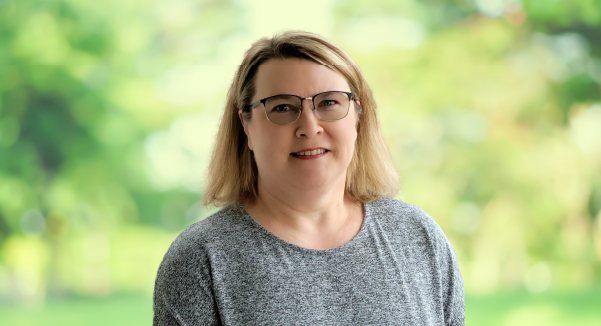
Abby Smith is a research assistant who is helping implement the Arthritis Foundation-funded KArAT (Knee Arthroplasty Activity Trial) study. Research has shown that people who undergo total knee replacement surgery often don’t increase their physical activity, even though they have much less arthritis-related pain or none at all. The KArAT study is testing whether personal coaching and financial incentives can help people become more active after a knee replacement.
Tell us about your background.
I was born in Honolulu, Hawaii, but moved to Boston, which I consider my home. Growing up in a city known for its hospitals and scientific innovation, and with a long family tradition of physicians, I was fortunate to gain early exposure to medicine. This environment was one of my first inspirations to further explore the medical field.
I graduated from Hamilton College in Clinton, New York, as a biochemistry/molecular biology major with a minor in Italian. At school, I was a member of both the women’s ice hockey and lacrosse teams, serving as captain for both my senior year. Competing in athletics was a highlight of my college experience; I valued the team culture, the intensity of games, the opportunities to travel across New England and beyond, and the privilege of representing my school on big stages such as the NCAA tournament.
In my senior year, I completed my thesis under Dr. Wei-Jen Chang. We investigated nucleotide transport in the protist T. thermophila, an organism widely used as a model due to its similarities to human cells. Our research aimed to better understand how these biomolecules cross cell membranes, with implications for pharmaceutical delivery systems and drug resistance mechanisms.
Since graduating in 2024, I have been living and working in Boston as a clinical researcher at the Orthopaedic and Arthritis Center for Outcomes Research (OrACORe).
What drew you to the field of science and research, and arthritis research in particular? What do you hope to accomplish professionally?
My interest in science and research began during high school, when I worked as a laboratory technician at Associates of Cape Cod (a biotechnology company). I spent my summers drawing and processing horseshoe crab blood with a team of 30 scientists. Horseshoe crab blood is incredibly valuable due to its unique clotting factors, making it a useful tool for testing the safety of biomedical technologies like vaccines. I enjoyed learning the intricacies of bench science, but I have always been interested in working directly with people.
With my background in sports, I was naturally drawn to orthopedics. At OrACORe, our research revolves around musculoskeletal health, specifically the impact of knee osteoarthritis (OA). Initially, I was surprised that a research center could be dedicated to just one disease, but I quickly came to understand how important and multifaceted that treating OA truly is. This type of research — one that aims to address a disease that is common and debilitating and seeks creative and targeted solutions for diverse demographics — is the kind of innovation I am interested in. I hope that my contributions to clinical research, whether large or small, can help improve arthritis care to truly help the patients I work with.
Currently, I am applying to medical school. I am not sure what my medical niche may be, but I do know that I am committed to keeping patient experiences at the center of my work. I hope to use research as a tool to highlight and address the challenges patients face daily, developing practical and impactful solutions.
Could you describe what you do with KArAT?
I work as a health coach, delivering motivational interviewing to some of our study’s participants. Motivational interviewing is a counseling approach that helps individuals identify their own intrinsic motivation to set goals and build the self-efficacy needed to execute them. During these conversations I use techniques such as affirmations, open-ended questions, reflections and confidence checks to guide participants to progress.
With KArAT specifically, I speak to participants who recently underwent total knee arthroplasty and now face a challenging road to recovery. My goal is to help them set rehabilitation goals that draw from their personal motivations to pursue a healthy and meaningful recovery. I feel fortunate to work with participants from across the country, each with unique recovery expectations and mindsets. No two conversations are alike, continually challenging me and furthering my understanding of the patient perspective following orthopaedic surgery.
Do you expect KArAT to affect patients either directly or indirectly?
Yes! I believe KArAT has the potential to change the standard of care following total knee arthroplasty. Many participants have shared how the study has motivated them to stay active and challenge their operative knee each day beyond what they would have done normally. Several have established new physical activity routines that not only support musculoskeletal health, but also contribute to weight management, cardiovascular health, mental health and overall well-being.
I think that surgeons and care teams could potentially use the work done by KArAT to “prescribe” more holistic rehabilitation regimens that include step-based activity goals paired with mental support. This approach could set up participants to recover more fully and improve long-term health.
What are you excited about in OA? What should patients be excited about?
I believe OA, due to its widespread and variable nature, is a field with much room for discovery. I am excited to keep witnessing the creative approaches that talented investigators are developing to better treat and manage OA.
Patients should be excited by the breadth of research that is happening in this field, especially the variety of treatments being explored. The OA experience is truly unique to each patient, so having multiple options for managing the disease is both practical and impactful.
What else would you like to share about your involvement with arthritis research?
In addition to KArAT, I work on several other large-scale clinical trials focused on advancing our understanding of arthritis. I am the clinical coordinator for PIKASO (Preventing Injured Knees from Osteoarthritis Severity Outcomes), which examines post-traumatic arthritis following acute ACL injury and surgery. I am also the coordinator for the CoMeT study, which investigates arthritis progression following meniscal surgery. Both of these Arthritis Foundation-funded studies approach arthritis from angles entirely different from KArAT, exemplifying the creativity and diversity of research happening in this field.


Stay in the Know. Live in the Yes.
Get involved with the arthritis community. Tell us a little about yourself and, based on your interests, you’ll receive emails packed with the latest information and resources to live your best life and connect with others.